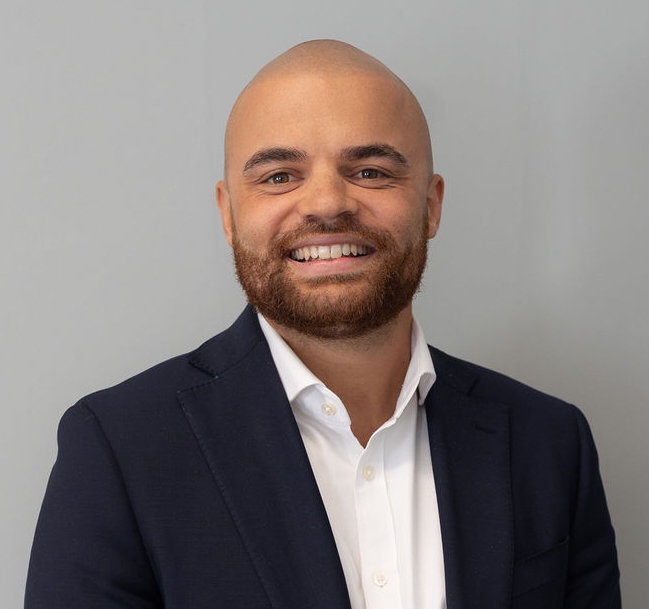



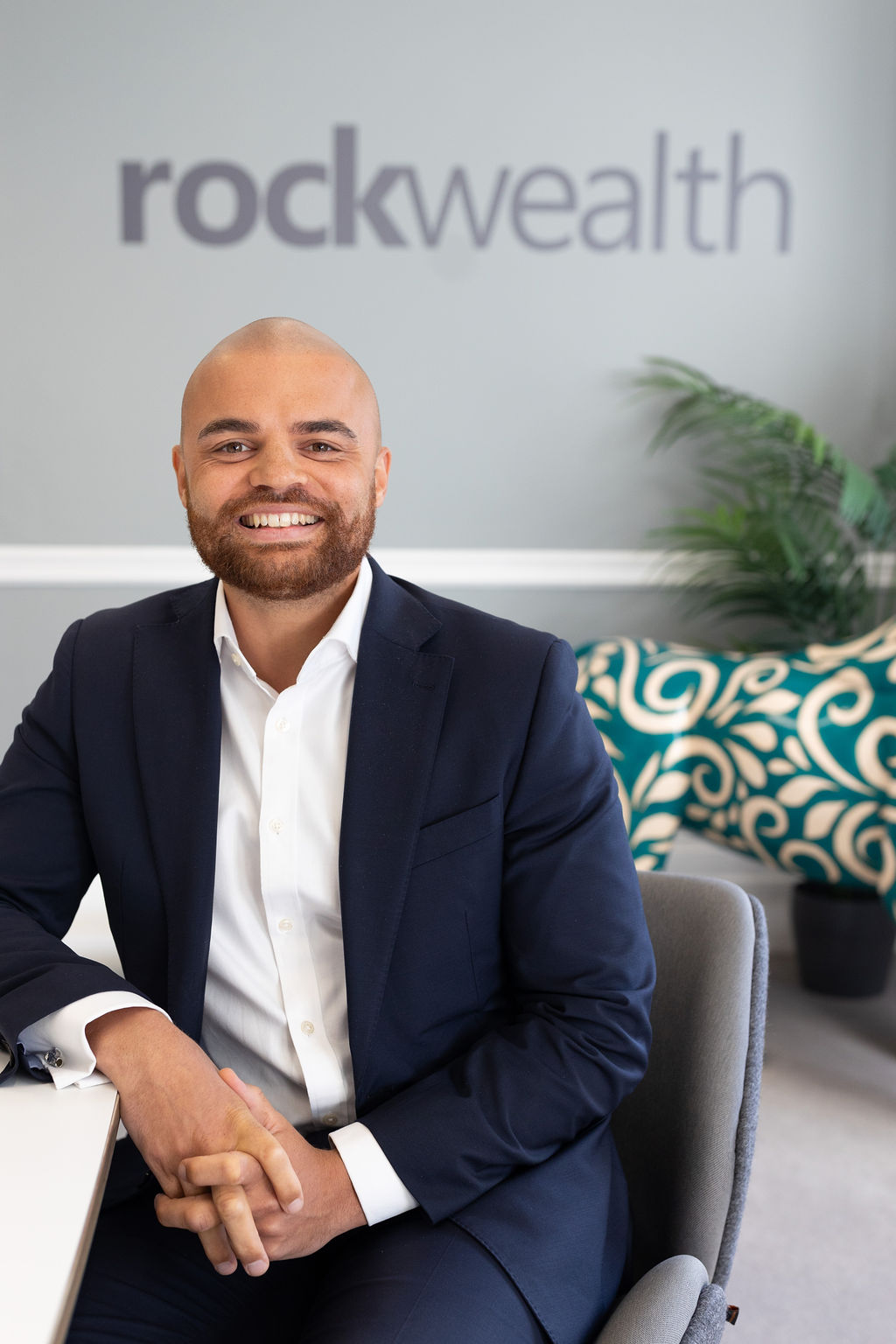
Over a decade spent inside the financial services industry showed Dylan Ellis precisely what was broken. Opaque fee structures that rewarded firms more than clients. Meetings squeezed into thirty-minute slots that barely scratched the surface. Advice shaped around products rather than the people sitting across the desk. When he joined rockwealth to open their Chelmsford office, it wasn't a career move. It was a correction.
Think about the last time you bought something expensive without fully understanding what you were paying for. Perhaps a mobile phone contract with charges buried in the small print. Or an insurance policy where the exclusions mattered more than the cover. You signed because the person selling it seemed confident, the paperwork looked official, and questioning it felt awkward.
That's how many people experience financial advice.
They sit with someone who uses language designed to reassure rather than clarify. They receive recommendations wrapped in jargon. They pay fees that are expressed as percentages, which sound small but compound into significant sums over years. And they leave the meeting trusting that someone is looking after their interests, without any real way of knowing whether that's true.
The FCA's Financial Lives 2024 survey laid this bare. Fewer than one in four UK adults regard financial advisers as professionals in the same category as solicitors or accountants. Nearly a quarter actively distrust advisers to act in their clients' best interests. These numbers don't reflect ignorance. They reflect experience.
Dylan spent more than a decade watching this erosion of confidence from the inside. He understood both why it happened and what a better version of advice could look like.
From the ground up
"I started in financial services back when I was 18," Dylan recalls. "I've recently turned 28. I've been lucky enough to experience many roles, but I'd always wanted to be a financial planner. Right back from work experience, when I worked in a bank and saw a financial planner at work."
That early encounter planted a seed that took root over a decade. Dylan worked his way through various positions across the industry, each one sharpening his understanding of what clients actually needed versus what they typically received.
"I've learnt a lot during this time, and it has provided clarity on the Financial Planner I want to be and what I do and don't want to represent. It's so important that you allow sufficient quality time to get to know your client, their wants, their needs, their aspirations, and then aligning the recommendations to this."
Time is the key word. In many advice firms, planners carry caseloads that make deep client relationships mathematically impossible. Revenue targets demand volume. Volume demands speed. Speed means cutting corners on the very conversations that determine whether advice actually fits someone's life.
Dylan saw this pattern repeat across firms and decided it wasn't something he could work around. It required a fundamentally different model.
The structural problem with conventional advice
The issues Dylan observed aren't the result of bad people doing bad work. They're the predictable outcome of a business model that creates the wrong incentives.
Begin with how most firms charge. "Percentage-based fees can be unfair," Dylan explains. "Clients end up subsidising other clients. People often pay far more than the value of the service they're actually receiving." An adviser collecting one per cent annually on a £1.8 million portfolio takes home £18,000 from that single client. The same adviser, delivering the same depth of service to someone with £200,000, earns £2,000. The work involved may be identical. The revenue is nine times higher.
This arithmetic warps everything downstream. Firms chase wealthier clients because they're more profitable. People with modest but meaningful savings struggle to find anyone willing to help them. And the clients who do pay percentage fees rarely understand how much those charges cost them over a lifetime of compounding.
Then there's the volume problem. The Schroders Adviser Pulse Survey from early 2025 found that 62% of advisers believe the FCA's Consumer Duty fair value requirements will pressure existing charging models. The industry itself recognises the tension between what clients should receive and what the business model can sustain.
The FCA's own February 2025 review of ongoing advice services stated that "a well-delivered ongoing service should be a beneficial and trusted relationship between client and adviser." The aspiration is clear. The delivery often falls short because the underlying economics pull in a different direction.
Dylan didn't want to spend another decade fighting those economics from within. He wanted to work somewhere the model itself was built correctly.
Discovering a different approach
The answer came through a combination of research and recommendation.
"I was lucky enough to come across rockwealth through recommendation," Dylan says. "It resonated with me when somebody I respected in the industry made the recommendation, because of my keenness to work with a firm that supported the evidence-based investment approach."
Evidence-based investing strips away the noise that dominates conventional portfolio management. Rather than trying to predict which markets will outperform or which fund managers will beat their benchmarks, it relies on decades of academic research to construct portfolios designed for long-term growth. Broad diversification. Systematic exposure to proven sources of return. Relentlessly low costs. It's not glamorous. The evidence shows it works.
But for Dylan, the investment philosophy was only part of the appeal. What mattered equally was how rockwealth structured its client relationships.
"I believe rockwealth represents meaningful financial planning," he explains. "What I mean by that is understanding what a client wants to achieve first, then tailoring recommendations and charging fair and fixed fees to reflect the work you're doing rather than a blanket fee approach."
Fixed fees change the dynamic entirely. When a planner charges for the work they perform rather than taking a percentage of what you own, the incentive to gather assets evaporates. The only way to build a sustainable practice is to deliver advice so good that clients stay and tell others about it.
Three principles, then. Evidence-based investing for the portfolio. Lifestyle financial planning for the conversation. Fixed fees for the relationship. Dylan had spent 11 years learning what was missing. This was it.
Why Chelmsford
Good financial planning shouldn't require a train journey to London, and Dylan recognised that the Chelmsford area was underserved by firms combining all three elements of the approach he believed in.
"When I was exploring opportunities, it's surprising how few firms there are that offer meaningful lifestyle financial planning whilst also charging fixed and fair fees, and the evidence-based approach."
Chelmsford and its surrounding areas are home to professionals, business owners, and retirees who've accumulated wealth through decades of hard work. But having wealth and knowing what to do with it are entirely different things.
"Like many places it's an area with people with wealth who don't know what to do with it, often," Dylan observes. "A big part of our job is about encouraging people to spend and enjoy their wealth as much as it is to save."
That observation captures something most financial advice overlooks. The purpose of building wealth isn't to watch a number grow on a screen. It's to fund a life worth living. Business owners approaching an exit who haven't thought about what comes next. Couples within reach of retirement who don't know whether their savings will sustain the life they want. Families trying to balance generosity towards their children with their own long-term security. These are the conversations that need having across Essex, and now there's a place to have them.
How the relationship works
The process begins with a conversation that costs nothing and commits you to nothing.
"Any initial conversation with me comes at absolutely no cost," Dylan explains. "It's very much about getting to know me and what I can do to help, and the value that I can add. You can make an informed decision at that point whether you want to further engage."
No sales pitch. No pressure to hand over account details or sign anything. Just a genuine exchange to establish whether there's a fit.
If you choose to proceed, the work starts not with your portfolio but with your life. What matters to you? What are you worried about? What would change if you had real clarity about your financial position? These questions aren't a box-ticking exercise. They're the foundation on which every recommendation is built.
The FCA's 2024 Financial Lives survey found that 67% of advised clients were prompted to seek their most recent advice because their adviser proactively reached out for a review. That kind of ongoing relationship, where your planner stays engaged rather than waiting for you to call with a problem, is what separates genuine planning from a transaction.
"I want to focus on the part of the job I love," Dylan says, "which is meeting with clients, truly understanding their goals and making recommendations."
The operational machinery, compliance requirements, investment administration, and regulatory reporting, is handled by the broader rockwealth infrastructure. That frees Dylan to concentrate entirely on the work that matters most: understanding your circumstances and providing advice that genuinely fits.
Moving forward
Hesitation is understandable. If previous experiences with financial professionals left you sceptical, that's a rational response to what you went through. But staying in limbo carries its own cost.
"Try not to let a bad experience stop you from making a positive step forward and getting advice," Dylan says. "Fundamentally, a lot of the questions you have on your mind won't be answered unless you engage a financial planner."
He's right. The uncertainty about whether you're on track for retirement, whether your pensions are working efficiently, whether you're paying more tax than necessary, none of that resolves on its own. Clarity requires a conversation with someone qualified to provide it.
Whether it's making sense of accumulated pensions, planning for a comfortable retirement, or simply understanding what your options are, the first step is always the same: a straightforward conversation about where you stand and where you want to be.
If you're in Chelmsford or the surrounding Essex area and ready for that conversation, rockwealth Chelmsford is open and taking on new clients.