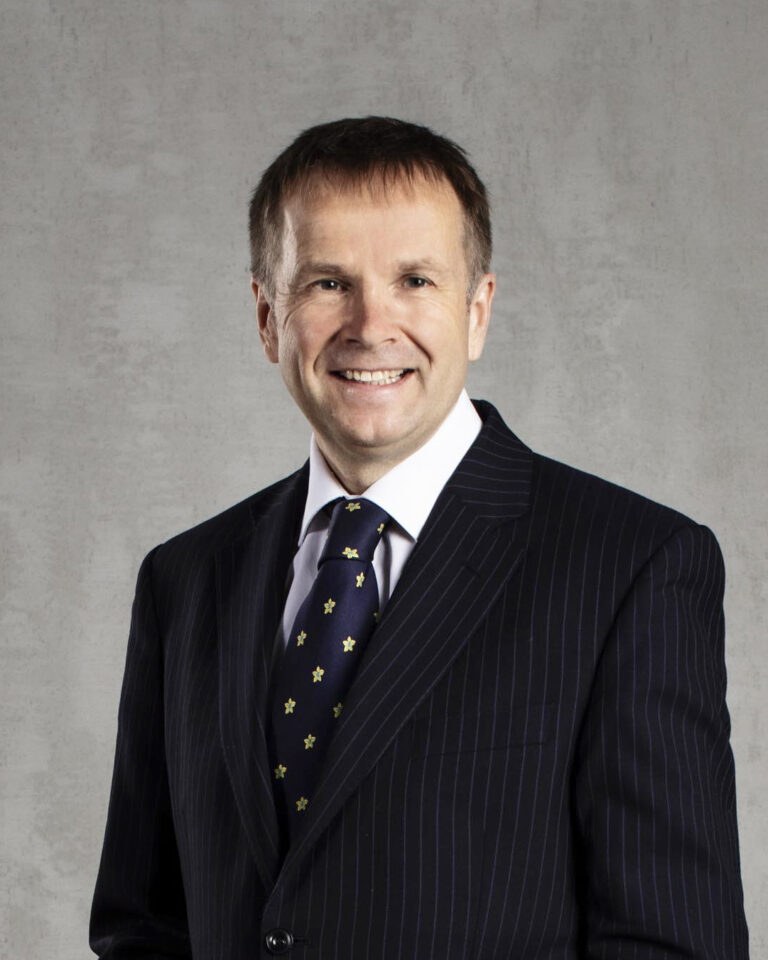


Most people think their financial problems are about money. Dylan Ellis, who founded rockwealth's Chelmsford office after more than 10 years in financial services, believes they're usually about something else: the money lessons absorbed in childhood, still quietly running the show decades later.
Most of us learned our first lessons about money before we could read.
Not from textbooks. From the texture of everyday life: the shift in a parent's voice when a bill arrived, the unspoken rule about not asking for things in certain weeks, the relief on a face when a payment finally cleared. We took it all in. We didn't know we were learning.
The map was drawn in childhood, usually without anyone intending to draw it. By adulthood it's become a navigation system running in the background, shaping decisions without announcing itself. Whether to spend or save. Whether to take a risk or hold back. Whether, when markets fall, to stay steady or reach for the exit.
The responses feel like common sense, like rational choices made in the moment. Often they're neither. They're the residue of experiences from decades ago, in circumstances that may bear no resemblance to the life being lived now.
The map isn't always wrong. Some of what we absorbed turns out to be sound: caution about debt, the habit of saving, a healthy scepticism about things that sound too good. But some of it doesn't serve us at all. And from the inside, the two look almost identical.
Knowing better isn't enough
Most people who make poor financial decisions aren't ignorant. They know, in the abstract, what good behaviour looks like. Keep investing through downturns. Don't chase last year's winner. Spend less than you earn. The principles aren't hidden.
And yet the investor who knows all this still sells when markets fall. The person who understands compound growth still can't bring themselves to draw on savings built over a lifetime. The high earner who could comfortably retire keeps working, anxious that what they have will somehow not be enough.
As rockwealth Chelmsford founder Dylan Ellis puts it: "Some people will overspend to make them feel good. Some people will save every penny because they're scared of it running out."
Both responses make a kind of sense. Neither is driven by a lack of financial literacy. They're driven by something older and less rational than knowledge, something that more information alone is unlikely to shift.
That's the gap worth understanding.
What the behaviour gap actually costs
The gap has a name. Morningstar calls it "mind the gap": the difference between what a fund returns and what the average investor in that fund receives. The shortfall exists because investors don't hold steadily; they move in and out at the wrong moments, buying confidence and selling fear.
In the UK, Morningstar's research suggests the gap runs at roughly 0.32 percentage points per year. That sounds modest. Applied to a £400,000 pension pot over 20 years, it isn't. Some broader UK research puts the aggregate cost higher, at around 1.2% annually, once all the ways timing erodes returns are counted. The global picture, where emotional responses to volatility tend to be more pronounced, suggests the gap can be wider still.
These aren't losses from bad investment choices. They're losses from good investments held badly.
The human cost sits alongside the financial one. Schroders' research into financial wellbeing found that money worries affect the mental health of a majority of UK adults, with a significant proportion experiencing direct impacts as a result. But the more striking detail is the distance between intention and action: most people who worry about money say sorting their finances is a priority. Very few have a plan in place.
Knowing the problem exists isn't the same as doing something about it.
How childhood writes your money behaviour
The research on loss aversion, developed by Daniel Kahneman and Amos Tversky, established something anyone who has watched their portfolio fall will recognise: losses feel roughly twice as painful as equivalent gains feel good. Losing £5,000 hurts far more than gaining £5,000 pleases. This asymmetry isn't a flaw in reasoning. It's a deeply embedded response, and evidence suggests it takes root early.
Children raised in households where money was scarce don't just learn that resources are limited. They internalise it. The anxiety around an unpaid bill, the careful rationing of small luxuries, the unspoken tension before payday: these experiences shape what psychologists call money scripts, the unconscious beliefs about money that govern adult behaviour. A scarcity mindset formed in a struggling household can persist through a lifetime of financial security, still whispering that it won't last, that spending is dangerous, that the floor could fall away at any moment.
Dylan Ellis didn't come to this through study. "We had stress when we were kids," he says. "I can't tell you how many school trips I missed out on." He grew up in a single-parent household where money was a source of worry rather than security. That experience, and the losses that followed in his early adult life, gave him an understanding of financial anxiety that no textbook provides.
The compulsive spender and the compulsive hoarder both make sense as responses to the terrain of a difficult childhood. The routes felt right when the map was drawn. Most people are still following them, years on, in circumstances the map was never designed for.
The planner who asks a different question
Most people assume the value of a financial planner lies in investment selection: picking the right funds, allocating assets correctly, trying to time the market. The evidence suggests otherwise.
Vanguard's research into what it calls Adviser's Alpha estimates that planners following best practices may contribute meaningful additional returns each year, net of fees. The largest single component isn't portfolio construction. It's behavioural coaching: keeping clients invested during downturns, preventing reactive decisions, helping them stay aligned with a plan when instinct pulls in the opposite direction.
The mental health findings point the same way. Research commissioned by HSBC Life found that people with a regularly reviewed financial plan were significantly more likely to report good mental health outcomes. Research by Royal London found that people working with a financial planner reported reduced anxiety and greater confidence about their financial future, compared to those managing alone.
Dylan describes what this looks like in practice: "When you're sitting down with people and the conversations you're having actually help them sleep better at night and give them genuine clarity." That's the measure he uses. Not fund performance. Whether the client can rest.
None of this is surprising, once you accept that the problem isn't a lack of knowledge. If the behaviour gap is rooted in emotional patterns, more information isn't the solution. What helps is someone who understands why the map was drawn the way it was, and can work with a client to examine which routes still serve them and which don't.
That's a different kind of question from "what should I invest in?" It's closer to: what is this money for, and what's getting in the way of using it well?
What it means to understand the map before touching the money
Dylan Ellis doesn't start with your portfolio. He starts with you.
"I don't believe I really have a right to talk to anyone about their money until I understand them and what makes them work," he says. "So I spend a significant amount of time understanding them and what they do."
The early conversations at rockwealth Chelmsford look quite different from what most people expect when they sit down with a financial planner. There's no immediate discussion of funds or pension valuations. The questions are about life: what matters to you, what you're worried about, what you'd do differently if money weren't the constraint. Only when those answers have some shape does the financial picture come into focus.
"Getting to know the client and saying, actually, what is important to you? What's all this money for?" Dylan explains. For some clients, the answer surprises them. They've spent years accumulating without asking the question.
What gives these conversations their weight is that Dylan isn't asking from a distance. He knows what financial stress costs: not from research, but from growing up inside it. "I wish my family had that when we were young," he says. "Just someone to sit us down and give us some direction, would've gone a million miles."
When a client can't bring themselves to draw on savings built over a lifetime, or when someone keeps taking on risk they don't need, Dylan recognises the map underneath the behaviour. His job isn't to replace it with a new one. It's to sit with the client and look at it together: which routes still lead somewhere worth going, which ones are running on old information, and how to navigate more deliberately from here.
Because rockwealth charges fixed fees, Dylan's income doesn't depend on the size of a client's portfolio. That matters more than it might seem. As Dylan puts it, advisers who don't do genuine financial planning face a structural problem: "If you're not doing that properly, the only way you can prove your worth is by being seen to be doing something." Fixed fees remove that pressure entirely. And because the evidence-based investment approach is built around long-term discipline rather than constant activity, there's no incentive to keep moving portfolios to justify a fee. The value is in the financial planning itself.
"My job sometimes is to say to those people, it's okay to go on that big holiday because we planned for it," he says. For clients whose instinct is always to hold back, to save rather than spend, to treat every outlay as a risk, that kind of permission, grounded in a real plan, can shift something that no amount of financial knowledge ever did.
The map worth leaving behind
The map drawn for Dylan Ellis in childhood was not a kind one. Scarcity, anxiety, early loss. The routes it offered were the ones available at the time: hold tight, expect little, brace for the floor to fall away.
He didn't follow it forever. But he knows what it cost, and he knows how long it can take to notice you're still using it.
"I want him to go on the school trips," he says of his three-year-old son. "I want him to go on a safari when he is 15 or 16 together as a family. Give him the opportunities I never had." That's the map Dylan is drawing now. Not one inherited from difficult circumstances, but one built deliberately, around a life worth living.
Most people carry an old map they never chose and never examined. Maps can be redrawn. The first step is noticing the one you've been following, recognising the routes mapped long ago in a house where money meant something very different to what it means today.
Talk to Dylan
The initial conversation with Dylan costs nothing and commits you to nothing. It's a chance to talk about your situation, ask whatever questions are on your mind, and get a clear sense of whether this approach suits you. No paperwork, no pressure, no expectation that you'll proceed.
Dylan works with individuals, families, and business owners across Chelmsford and the wider Essex area. The conversation starts with your goals and circumstances, not your portfolio value.
If it feels like a good fit, the work begins from there. If it doesn't, you'll leave with more clarity than you arrived with, and nothing owed.
You can read more about Dylan's background and approach and how fixed-fee financial planning works. To make an appointment, call us on 01245 415979, or click on "Book a call" and answer a few simple questions. It will only take two minutes.